[Get the best value jewelry making wire on Amazon today!]
# The Ultimate Guide to Jewelry Making Wire: Types, Gauges, and More
Making jewelry is a rewarding craft, and the foundation of many stunning pieces lies in the humble jewelry making wire. But with so many types, gauges, and materials available, choosing the right wire can feel overwhelming. That’s where this guide comes in! We’ll break down everything you need to know about jewelry making wire, empowering you to create beautiful, durable, and professional-looking jewelry.
[Browse top-rated jewelry making wire on Amazon]
## Understanding Jewelry Making Wire
Jewelry making wire isn’t just a simple strand of metal. It’s a versatile material that can be shaped, bent, twisted, and woven to create intricate designs. The right wire can make or break a piece, so understanding its properties is crucial. Let’s dive into the key aspects: types of metal, gauges (thickness), and shapes.
### Types of Jewelry Making Wire Metals
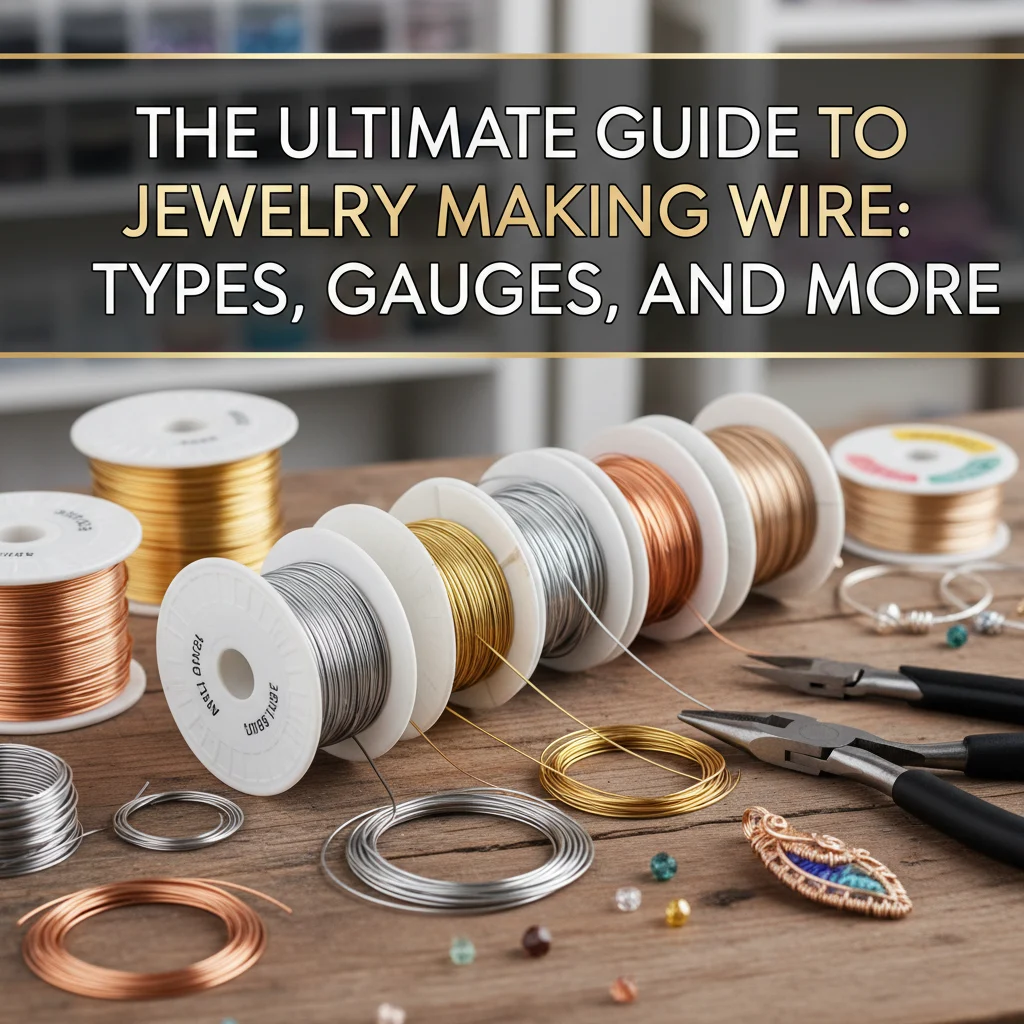
The metal used in jewelry making wire significantly impacts its appearance, strength, durability, and price. Here’s a rundown of the most popular options:
* **Copper:** A soft, pliable metal ideal for beginners. It’s inexpensive and readily available. Copper wire is excellent for practicing techniques and creating artistic, rustic pieces. However, it tarnishes easily and may not be suitable for fine jewelry unless treated with a protective coating.
* **Best For:** Practice, learning techniques, artistic projects, and adding a rustic touch.
* **Brass:** An alloy of copper and zinc, brass offers a warm, golden hue. It’s more durable than copper and resists tarnishing better. Brass wire is a good choice for creating vintage-inspired jewelry.
* **Best For:** Vintage designs, adding warmth, and projects requiring more durability than copper.
* **Sterling Silver:** A popular choice for high-quality jewelry. Sterling silver is an alloy of silver and copper (usually 92.5% silver, hence the “925” stamp). It’s durable, beautiful, and holds its value well. However, it can tarnish, requiring occasional polishing.
* **Best For:** High-quality jewelry, pieces meant to last, and designs requiring a classic look.
* **Fine Silver:** Composed of 99.9% pure silver, fine silver is softer and more tarnish-resistant than sterling silver. It’s a great option for delicate designs and those sensitive to alloys.
* **Best For:** Delicate designs, hypoallergenic jewelry, and projects requiring high tarnish resistance.
* **Gold-Filled Wire:** This wire has a layer of gold bonded to a base metal (usually brass). It’s more affordable than solid gold and offers excellent durability. Gold-filled wire is a great option for jewelry that will be worn frequently.
* **Best For:** Durable, long-lasting jewelry, pieces requiring a gold look without the high cost of solid gold.
* **Gold Wire:** Solid gold wire is the most luxurious option. It’s available in various karats (purity levels), with 24k being the purest and softest. Gold wire is prized for its beauty, durability, and resistance to tarnish.
* **Best For:** High-end jewelry, heirloom pieces, and designs requiring the ultimate in luxury and durability.
* **Stainless Steel:** A strong, durable, and hypoallergenic option. Stainless steel wire is resistant to tarnish and corrosion, making it ideal for everyday wear. It’s also a good choice for those with metal sensitivities.
* **Best For:** Hypoallergenic jewelry, durable pieces, and designs requiring a modern, industrial look.
* **Titanium:** Lightweight, strong, and hypoallergenic, titanium wire is an excellent choice for those with sensitivities. It’s also highly resistant to corrosion and tarnish.
* **Best For:** Hypoallergenic jewelry, lightweight designs, and pieces requiring exceptional strength.
* **Niobium:** Another hypoallergenic option, niobium wire is available in a variety of colors through anodization. It’s lightweight, strong, and resistant to tarnish.
* **Best For:** Hypoallergenic jewelry, colorful designs, and pieces requiring a unique look.
### Understanding Wire Gauges
Gauge refers to the thickness of the wire. The higher the gauge number, the thinner the wire. Choosing the right gauge is crucial for the strength and appearance of your jewelry. Here’s a general guide:
* **12-16 Gauge (Thickest):** Used for heavy-duty projects like armatures, bangles, and wire sculptures. These gauges are strong and hold their shape well.
* **18-20 Gauge:** Ideal for creating sturdy components like jump rings, clasps, and ear wires. Also suitable for wire wrapping stones.
* **22-24 Gauge:** A versatile gauge for wire wrapping, creating delicate links, and weaving. It’s thin enough to be easily manipulated but still strong enough for many applications.
* **26-28 Gauge (Thinnest):** Used for intricate wire weaving, delicate accents, and creating fine details. These gauges are fragile and require careful handling.
* **30+ Gauge:** Usually used for bead stringing or very fine detail work.
**Here’s a helpful table summarizing wire gauges:**
| Gauge | Thickness | Common Uses |
| :—– | :————— | :———————————————————————– |
| 12-16 | Thick | Armatures, bangles, wire sculptures |
| 18-20 | Medium-Thick | Jump rings, clasps, ear wires, wire wrapping stones |
| 22-24 | Medium | Wire wrapping, delicate links, weaving |
| 26-28 | Thin | Intricate wire weaving, delicate accents, fine details |
| 30+ | Very Thin | Bead stringing, very fine detail work |
### Wire Shapes: Round, Square, Half-Round, and More
Wire comes in various shapes, each offering unique aesthetic and functional properties:
* **Round Wire:** The most common type, used for a wide range of applications. It’s versatile and easy to work with.
* **Square Wire:** Creates clean, geometric lines and adds a modern touch to jewelry. It’s also good for creating strong, durable components.
* **Half-Round Wire:** Offers a flat surface on one side and a rounded surface on the other. This shape is ideal for wire wrapping stones and creating comfortable, smooth edges.
* **D-Shape Wire:** Similar to half-round, but with a more pronounced curve. It’s often used for creating rings and bangles.
* **Flat Wire:** Provides a wide, flat surface that’s ideal for creating textured designs and adding visual interest.
[Browse top-rated jewelry making wire on Amazon]
## Choosing the Right Jewelry Making Wire: A Step-by-Step Guide
Now that you understand the basics, let’s walk through the process of choosing the right wire for your project:
1. **Consider the Project:** What type of jewelry are you making? A delicate necklace, a sturdy bracelet, or a wire-wrapped pendant? The project will dictate the required strength and flexibility of the wire.
2. **Think About the Design:** Do you want a rustic, vintage look or a modern, sleek design? The metal and shape of the wire will influence the overall aesthetic.
3. **Factor in Durability:** How often will the piece be worn? For everyday wear, choose durable metals like gold-filled, stainless steel, or titanium.
4. **Consider Your Budget:** Prices vary significantly between different metals. Copper and brass are the most affordable, while gold and platinum are the most expensive.
5. **Think About Skin Sensitivity:** If you’re making jewelry for someone with metal sensitivities, choose hypoallergenic options like stainless steel, titanium, or niobium.
6. **Experiment and Practice:** Don’t be afraid to try different types and gauges of wire to see what works best for you. Practice with inexpensive copper wire before working with more expensive metals.
[Browse top-rated jewelry making wire on Amazon]
## Essential Tools for Working with Jewelry Making Wire
Having the right tools will make your wire working experience much easier and more enjoyable. Here are some essential tools:
* **Wire Cutters:** For cleanly cutting wire. Choose cutters designed specifically for jewelry making wire to avoid damaging the metal.
* **Round Nose Pliers:** For creating loops and curves in the wire.
* **Chain Nose Pliers:** For gripping, bending, and shaping wire.
* **Flat Nose Pliers:** For flattening and straightening wire.
* **Nylon Jaw Pliers:** For straightening wire without scratching or marring the surface.
* **Wire Straightener:** A tool that quickly and easily straightens wire.
* **Jeweler’s Hammer:** For hardening and texturing wire.
* **Bench Block:** A steel block used as a surface for hammering and shaping wire.
* **Files:** For smoothing rough edges and removing burrs from the wire.
* **Ruler or Caliper:** For measuring wire accurately.
* **Mandrel:** For shaping rings and bangles.
Here are a couple of product recommendations to get you started:
* **Beadsmith Jewelry Pliers Set:** This set includes round nose, chain nose, and flat nose pliers, providing you with the essential tools for wire working. You can find it on Amazon using this link: [Amazon Affiliate Link to Beadsmith Pliers Set]
* **Wubbers Wire Straight
[Check the latest prices and deals for jewelry making wire on Amazon today!]


