[Get the best value jewelry jump rings on Amazon today!]
# The Ultimate Guide to Jewelry Jump Rings in 2026
Hey there, jewelry-making enthusiasts! Are you ready to take your creations to the next level? Then you’ve landed in the right place. In this ultimate guide to **jewelry jump rings**, we’re going to dive deep into everything you need to know about these tiny but mighty components. Whether you’re a seasoned pro or just starting out, understanding the ins and outs of jump rings is crucial for creating professional-looking, durable, and beautiful jewelry. Get ready to jump in (pun intended!) to the wonderful world of jewelry jump rings!
[Browse top-rated jewelry jump rings on Amazon]
## Understanding Jewelry Jump Rings
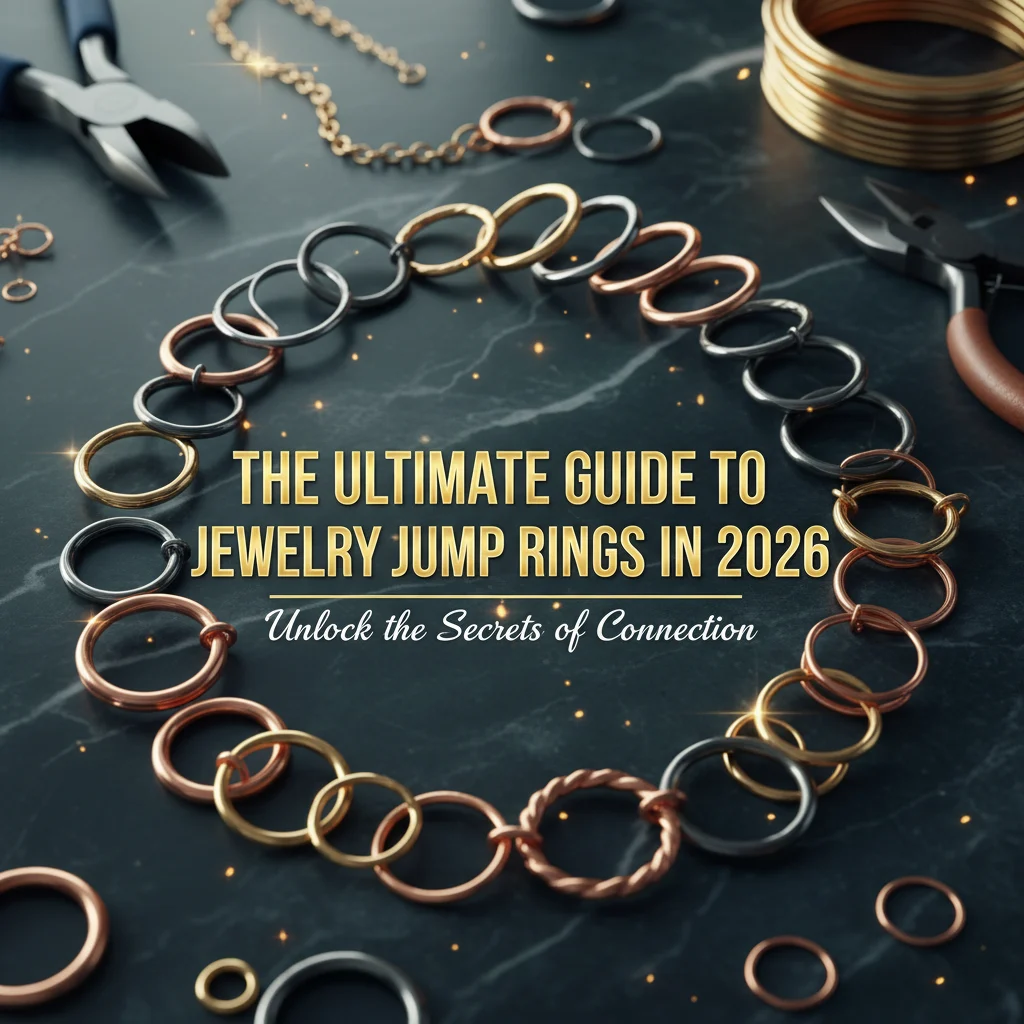
So, what exactly *are* **jewelry jump rings**? Simply put, they are small, circular metal rings that are used to connect different components of jewelry. Think of them as the glue that holds your necklaces, bracelets, earrings, and charms together. They might seem insignificant, but a poorly chosen or improperly closed jump ring can lead to broken jewelry and unhappy customers (or a disappointing personal project!).
Jump rings come in a wide variety of materials, sizes, gauges (thickness), and shapes. Choosing the right one for your project is essential for both the aesthetic appeal and the structural integrity of your piece. In this guide, we’ll cover all these aspects, ensuring you have the knowledge to make informed decisions.
[Browse top-rated jewelry jump rings on Amazon]
## Jump Ring Materials: Choosing the Right Metal
The material of your **jewelry jump rings** is a critical factor. It affects not only the appearance of your jewelry but also its durability, tarnish resistance, and overall value. Here’s a breakdown of some of the most common materials:
* **Sterling Silver:** A popular choice for its bright, classic look and affordability. Sterling silver contains 92.5% pure silver and 7.5% other metals (usually copper) to increase its strength. However, sterling silver is prone to tarnishing, so regular cleaning is required. Look for jump rings with an anti-tarnish coating for added protection.
* **Gold-Filled:** A more affordable alternative to solid gold. Gold-filled jump rings have a layer of gold bonded to a base metal (usually brass). The gold layer is significantly thicker than gold plating, making it more durable and tarnish-resistant. It’s a great option for jewelry that will be worn frequently.
* **Gold-Plated:** A thin layer of gold is applied to a base metal. Gold-plated jump rings are the least expensive option, but they are also the least durable. The gold plating can wear off over time, especially with frequent wear.
* **Copper:** A warm, reddish-brown metal that is often used in rustic or bohemian-style jewelry. Copper is relatively soft and can tarnish easily, but it can also be treated with a sealant to prevent tarnishing.
* **Brass:** An alloy of copper and zinc, brass has a golden-yellow color. It’s stronger and more durable than copper and is often used as a base metal for gold-filled or gold-plated jump rings. Like copper, brass can tarnish, but it can be cleaned or sealed.
* **Stainless Steel:** A strong, durable, and tarnish-resistant metal that is ideal for everyday wear. Stainless steel is also hypoallergenic, making it a good choice for people with sensitive skin. It has a silvery-gray color and a modern, industrial look.
* **Niobium and Titanium:** These are hypoallergenic metals that are great for people with metal sensitivities. They are strong, lightweight, and come in a variety of colors. They are also extremely resistant to tarnishing.
When choosing the material for your **jewelry jump rings**, consider the overall style of your jewelry, your budget, and the durability requirements of the piece.
[Browse top-rated jewelry jump rings on Amazon]
## Sizing Up Your Jump Rings: Diameter and Gauge
Two key measurements determine the size of a **jewelry jump ring**: diameter and gauge. Understanding these measurements is crucial for selecting the right jump rings for your project.
* **Diameter:** The diameter of a jump ring is the measurement across the circle, from one inside edge to the opposite inside edge (inner diameter). Jump rings are typically measured in millimeters (mm). The diameter you need will depend on the size of the components you are connecting. For example, if you are connecting a small charm to a delicate chain, you’ll need a small-diameter jump ring.
* **Gauge:** The gauge of a jump ring refers to the thickness of the wire used to make the ring. The higher the gauge number, the thinner the wire. For example, an 18-gauge jump ring is thicker than a 22-gauge jump ring. The gauge you need will depend on the weight and size of the components you are connecting, and the desired strength of the connection.
Here’s a general guideline for choosing the right gauge:
* **20-gauge or thicker:** Use for heavier pendants, bracelets, and necklaces that need extra strength.
* **21-gauge to 24-gauge:** Use for general-purpose connections, earrings, and lightweight pendants.
* **26-gauge or thinner:** Use for delicate projects, fine chains, and attaching lightweight charms.
It’s always a good idea to have a variety of jump ring sizes and gauges on hand so you can choose the perfect one for each project.
[Browse top-rated jewelry jump rings on Amazon]
## Jump Ring Shapes: Round, Oval, and Beyond
While round jump rings are the most common, they are not the only option. The shape of your **jewelry jump rings** can add a unique touch to your designs.
* **Round:** The classic and most versatile shape. Round jump rings are suitable for most jewelry-making applications.
* **Oval:** Slightly elongated, oval jump rings can add a subtle visual interest to your designs. They are often used to connect components that are also oval or elongated.
* **Twisted:** These jump rings have a slight twist in the wire, creating a textured look. They can add a bit of sparkle and dimension to your jewelry.
* **Triangle and Other Shapes:** While less common, jump rings can also be found in other shapes, such as triangles, squares, and even hearts. These can be used to create unique and eye-catching designs.
Consider the overall aesthetic of your jewelry when choosing the shape of your **jewelry jump rings**.
[Browse top-rated jewelry jump rings on Amazon]
## Opening and Closing Jump Rings Like a Pro
Properly opening and closing **jewelry jump rings** is crucial for creating strong and secure connections. The goal is to open the ring without distorting its shape, and to close it so that the ends meet perfectly. Here’s the correct technique:
1. **Use Two Pliers:** You’ll need two pairs of pliers – chain-nose pliers or flat-nose pliers are ideal.
2. **Grip the Jump Ring:** Hold one side of the jump ring with one pair of pliers, and the other side with the other pair. Make sure you are gripping the ring firmly but not too tightly.
3. **Open with a Twisting Motion:** Instead of pulling the ends apart, twist them slightly in opposite directions, keeping the ring as round as possible. Imagine you’re opening a door – you want to swing the ends apart, not stretch them.
4. **Attach Your Components:** Slide the jump ring through the loops of the components you want to connect.
5. **Close the Jump Ring:** Using the same pliers, twist the ends back together until they meet perfectly. There should be no gap between the ends.
6. **Check the Closure:** Run your fingernail over the closure to make sure it’s smooth and flush. If you feel any snagging, the ends are not aligned properly. Use your pliers to adjust them until they are perfectly aligned.
**Important Tips:**
* **Never pull the ends of a jump ring apart.** This will distort the shape and weaken the metal, making the connection less secure.
* **Use the right size pliers.** Pliers that are too large can be difficult to control, while pliers that are too small may not provide enough grip.
* **Practice makes perfect.** It may take a few tries to get the hang of opening and closing jump rings properly. Don’t get discouraged if you don’t get it right away.
[Browse top-rated jewelry jump rings on Amazon]
## Soldered vs. Unsoldered Jump Rings: Which to Choose?
**Jump rings** come in two main types: soldered and unsoldered. Soldered jump rings have a permanent closure, while unsoldered jump rings can be opened and closed. Here’s a comparison:
**Soldered Jump Rings:**
* **Pros:**
* Extremely strong and secure.
* Ideal for high-stress areas, such as connecting a pendant to a chain.
* Provide a professional, finished look.
* **Cons:**
* Cannot be opened and closed.
* More expensive than unsoldered jump rings.
* Require soldering equipment and skills to work with (if you need to add one to a piece).
**Unsoldered Jump Rings:**
* **Pros:**
* Can be opened and closed easily.
* More affordable than soldered jump rings.
* Versatile and convenient for a variety of jewelry-making tasks.
* **Cons:**
* Not as strong or secure as soldered jump rings.
* Can come open if not closed properly.
* Not suitable for high-stress areas.
When deciding between soldered and unsoldered **jewelry jump rings**, consider the following:
* **The weight and size of the components you are connecting.** For heavier components, soldered jump rings are recommended.
* **
[Check the latest prices and deals for jewelry jump rings on Amazon today!]