[Get the best value gold jump rings on Amazon today!]
# The Ultimate Guide to Gold Jump Rings: Sizes, Uses, and More
Hey there, jewelry makers! Are you ready to dive deep into the world of gold jump rings? If you’ve ever struggled with finding the right size, understanding the different uses, or just felt a bit lost in the sheer variety available, you’re in the right place. This guide is your one-stop shop for everything you need to know about gold jump rings, from the basics to more advanced techniques. Let’s get started!
[Browse top-rated gold jump rings on Amazon]
## What are Gold Jump Rings?
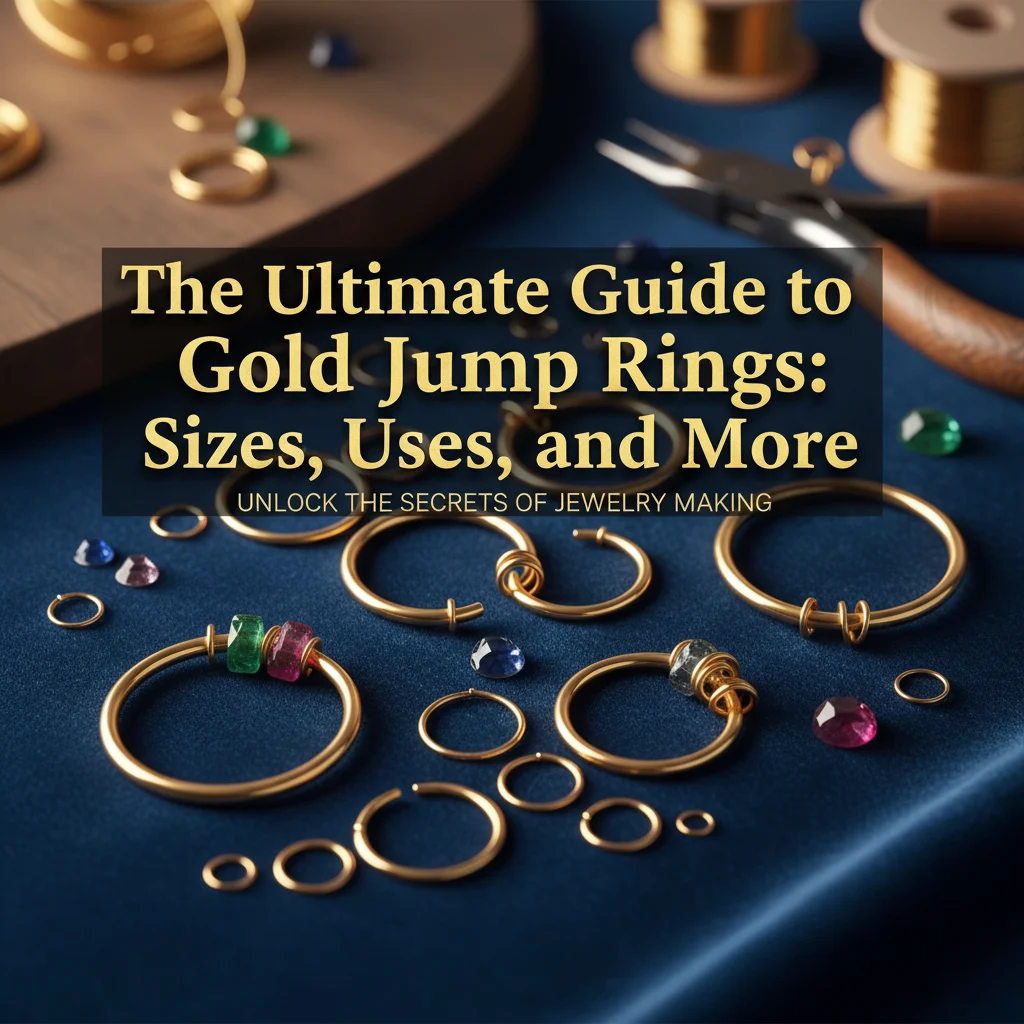
Gold jump rings are small, circular pieces of gold wire that are used to connect different components in jewelry making. Think of them as the unsung heroes that hold everything together, from charms and pendants to clasps and beads. They come in various sizes, thicknesses (gauge), and gold purities, making them incredibly versatile for a wide range of projects.
[Browse top-rated gold jump rings on Amazon]
## Why Gold Jump Rings?
You might be wondering, “Why choose gold jump rings over other materials?” Well, gold offers a unique combination of beauty, durability, and hypoallergenic properties. Here’s a breakdown:
* **Aesthetic Appeal:** Gold adds a touch of elegance and sophistication to any piece of jewelry. Its warm, radiant color complements a variety of gemstones and other materials.
* **Durability:** Gold is resistant to tarnishing and corrosion, ensuring that your jewelry will maintain its luster for years to come. While pure gold is soft, alloys like 14k and 18k gold provide excellent strength and durability.
* **Hypoallergenic Properties:** Gold is generally well-tolerated by people with sensitive skin, making it a great choice for earrings, necklaces, and bracelets.
* **Value:** Gold retains its value over time, adding an investment aspect to your jewelry creations.
[Browse top-rated gold jump rings on Amazon]
## Sizes of Gold Jump Rings
One of the most crucial aspects of working with gold jump rings is understanding their sizes. The size of a jump ring refers to its outer diameter, typically measured in millimeters (mm). Here’s a general guide to common sizes and their uses:
* **3mm-4mm:** These tiny jump rings are perfect for delicate jewelry projects, such as connecting small charms, linking fine chains, or creating intricate beadwork. They’re ideal for lightweight components and projects where subtlety is key.
* **5mm-6mm:** A versatile size that works well for a variety of applications. Use them to connect pendants to necklaces, link bracelet segments, or attach clasps to earrings. They offer a good balance between strength and visibility.
* **7mm-8mm:** These medium-sized jump rings are suitable for slightly heavier components and more robust connections. They’re often used in bracelets, anklets, and necklaces with medium-sized pendants.
* **9mm-10mm:** Larger jump rings that provide a strong and secure connection for heavier pendants, chunky bracelets, and statement earrings. They’re also useful for creating focal points in your designs.
* **11mm+:** These are the giants of the jump ring world! Use them for very heavy pendants, keychains, or when you want a bold, visible connector. They’re great for adding an industrial or edgy touch to your jewelry.
**Choosing the Right Size:**
To choose the right size of gold jump rings, consider the following factors:
* **Weight of the Components:** Heavier components require larger, stronger jump rings.
* **Aesthetic Preference:** Do you want the jump rings to be subtle or a visible part of the design?
* **Hole Size of the Components:** Make sure the jump ring can easily pass through the holes of the beads, charms, or clasps you’re using.
[Browse top-rated gold jump rings on Amazon]
## Uses of Gold Jump Rings
Gold jump rings are incredibly versatile and can be used in a wide range of jewelry-making projects. Here are some common applications:
* **Connecting Charms and Pendants:** One of the most common uses is to attach charms and pendants to necklaces, bracelets, and earrings. The jump ring acts as a bridge between the charm and the chain or finding.
* **Linking Chain Segments:** Jump rings are essential for creating custom-length chains or adding decorative elements to existing chains. They allow you to connect different sections of chain seamlessly.
* **Attaching Clasps and Closures:** Securing clasps, lobster claws, toggle clasps, and other closures to your jewelry pieces is another crucial application. A strong jump ring ensures that your jewelry stays securely fastened.
* **Creating Dangles and Drops:** Jump rings can be used to create dangles and drops for earrings, necklaces, and bracelets. Simply attach beads, crystals, or other decorative elements to the jump ring and then connect it to the main piece.
* **Repairing Jewelry:** Jump rings are invaluable for repairing broken jewelry. Replacing a damaged or missing jump ring can often restore a piece to its former glory.
* **Wire Wrapping:** Smaller jump rings can be integrated into wire-wrapped jewelry designs, adding both structural support and decorative flair.
* **Beadwork:** Incorporate jump rings into your beadwork projects to create intricate patterns, connect different strands, or add movement and dimension.
[Browse top-rated gold jump rings on Amazon]
## Different Types of Gold Jump Rings
Not all gold jump rings are created equal. They come in various styles, each with its own advantages and disadvantages. Here’s a rundown of the most common types:
* **Open Jump Rings:** These are the most basic type, featuring a single break in the circle. They’re easy to open and close, but they can also be more prone to opening accidentally if not properly closed.
* **Closed Jump Rings (Soldered):** These jump rings are permanently sealed with solder, providing a much stronger and more secure connection. They’re ideal for projects where durability is paramount.
* **Double Jump Rings:** These consist of two interlocking rings, offering extra strength and preventing the components from pulling apart easily.
* **Split Rings:** Similar to key rings, split rings feature two overlapping coils. They’re very secure and are often used for keychains and other heavy-duty applications.
* **Twisted Jump Rings:** These jump rings have a decorative twist, adding a unique visual element to your jewelry designs.
[Browse top-rated gold jump rings on Amazon]
## Gold Purity: Karat Explained
When choosing gold jump rings, it’s important to understand the different levels of gold purity, which are measured in karats (k). Here’s a quick overview:
* **24k Gold:** This is pure gold, containing 99.9% gold. It’s very soft and malleable, making it unsuitable for most jewelry applications.
* **22k Gold:** Contains 91.67% gold. It’s still quite soft and is often used in traditional jewelry designs.
* **18k Gold:** Contains 75% gold and 25% other metals. It offers a good balance between purity and durability, making it a popular choice for fine jewelry.
* **14k Gold:** Contains 58.3% gold and 41.7% other metals. It’s more durable than 18k gold and is a great option for everyday wear.
* **10k Gold:** Contains 41.7% gold and 58.3% other metals. It’s the most affordable option and is very durable, but it may not have the same rich color as higher karat gold.
The best karat for your gold jump rings will depend on your budget, aesthetic preferences, and the intended use of the jewelry. For most projects, 14k or 18k gold offer an excellent balance of beauty and durability.
[Browse top-rated gold jump rings on Amazon]
## Tools for Working with Gold Jump Rings
To work effectively with gold jump rings, you’ll need a few essential tools:
* **Jewelry Pliers:** Two pairs of pliers are essential for opening and closing jump rings without damaging them. Chain-nose pliers and flat-nose pliers are the most common choices.
* **Jump Ring Opener/Closer Tool:** This specialized tool makes it easy to open and close jump rings with precision and consistency.
* **Magnifying Glass:** A magnifying glass can be helpful for working with very small jump rings.
* **Bench Block:** A steel bench block provides a stable surface for hammering and shaping jump rings.
* **Jeweler’s Hammer:** A small hammer can be used to flatten or shape jump rings as needed.
[Browse top-rated gold jump rings on Amazon]
## How to Open and Close Gold Jump Rings Properly
Opening and closing jump rings correctly is crucial to ensure a secure and professional finish. Here’s the proper technique:
1. **Grip the Jump Ring:** Use two pairs of pliers to grip the jump ring on either side of the opening.
2. **Open the Jump Ring:** Gently pull the ends of the jump ring apart in a twisting motion, rather than pulling them straight out. This will help maintain the shape of the ring.
3. **Attach the Components:** Slide the components you want to connect onto the open jump ring.
4. **Close the Jump Ring:** Use the pliers to gently push the ends of the jump ring back together, making sure they meet flush. There should be no gap or overlap.
**Pro Tip:** Avoid opening and closing jump rings repeatedly, as this can weaken the metal and make them more prone to breaking.
[Browse top-rated gold jump rings on Amazon]
## Where to Buy Gold Jump Rings
You can find gold jump rings at most jewelry supply stores, both online and in person. Here are a few reputable sources:
* **Amazon:** A vast selection of gold jump rings in various sizes, karats, and styles.
* **
[Check the latest prices and deals for gold jump rings on Amazon today!]


