[Get the best value beading needle on Amazon today!]
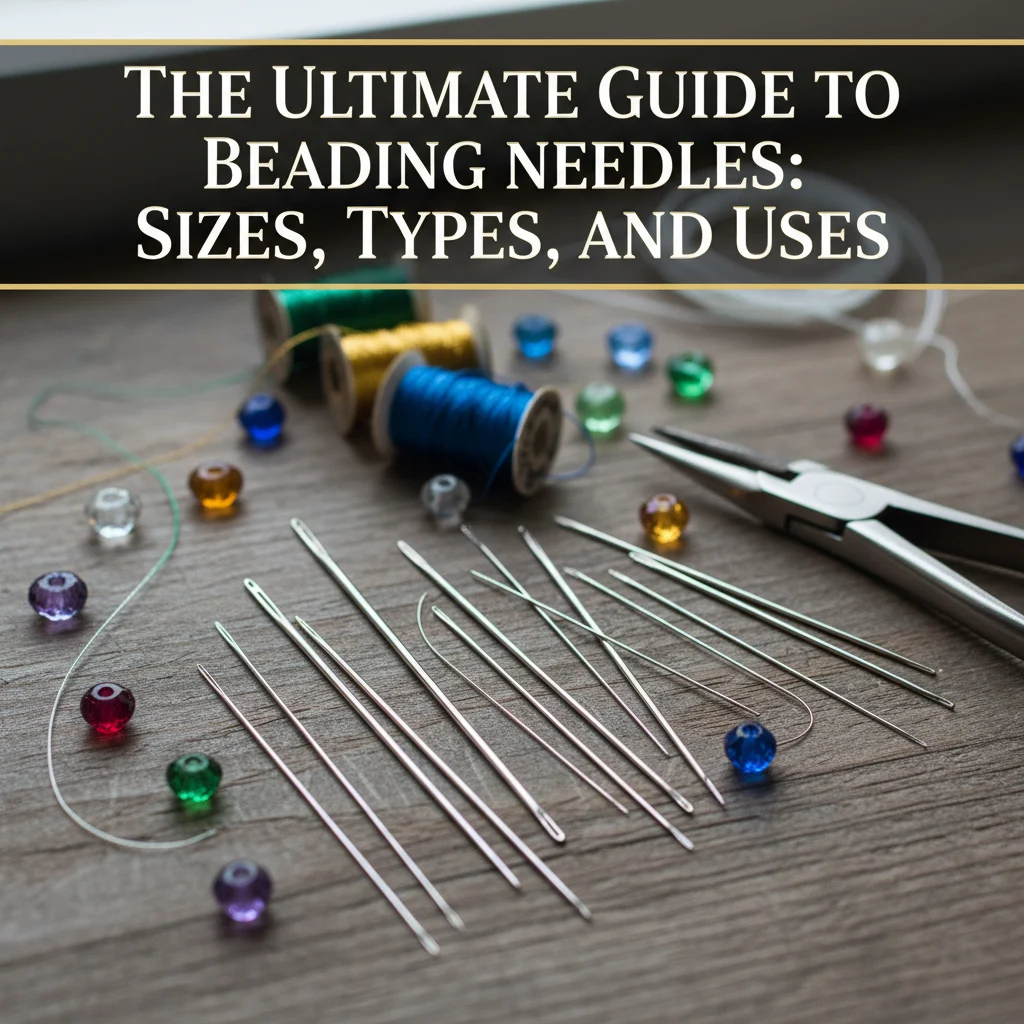
# The Ultimate Guide to Beading Needles: Sizes, Types, and Uses
Beading needles. They might seem like a simple tool, but choosing the right one can make or break your beading project. Are you constantly struggling with needles that bend, break, or just won’t thread through your beads? Do you find yourself spending more time wrestling with your materials than actually creating beautiful jewelry or embellishments? If so, you’ve come to the right place. This ultimate guide will unravel the mysteries of beading needles, covering everything from sizes and types to their specific uses. By the end, you’ll be armed with the knowledge to select the perfect needle for any beading adventure. Let’s dive in!
[Browse top-rated beading needle on Amazon]
## Understanding Beading Needle Sizes
One of the first things you’ll notice when shopping for beading needles is the wide range of sizes. These sizes are denoted by a number, and it might seem counterintuitive, but the *higher* the number, the *thinner* the needle. Why? Because the number refers to how many needles of that size can fit in a specific gauge. So, a size 12 needle is thinner than a size 10 needle.
But why does size matter so much? It’s all about the beads. You need a needle that’s thin enough to pass through the bead hole multiple times, especially when working on intricate patterns or multi-strand projects. However, the needle also needs to be strong enough to withstand the tension of the thread and the friction of the beads.
Here’s a general guideline for matching needle size to bead size:
* **Size 10-13:** Ideal for seed beads (size 11, 15), which have very small holes. These needles are delicate and best suited for fine work.
* **Size 10:** A good all-around size for seed beads and some smaller gemstone beads.
* **Size 8-10:** Suitable for larger seed beads (size 8) and some glass beads.
* **Size 6-8:** Works well with larger beads, such as fire-polished beads, pearls, and some gemstone beads.
* **Size 5-6:** Best for beads with larger holes, such as pony beads or some lampwork beads.
Keep in mind that these are just guidelines. The best way to determine the right size is to experiment and see what works best for your specific beads and thread. Always test the needle before starting your project to ensure it passes through the bead holes easily and without excessive force.
[Browse top-rated beading needle on Amazon]
## Exploring Different Types of Beading Needles
Beyond size, beading needles come in various types, each designed for specific beading techniques and materials. Understanding these types will help you choose the right tool for the job.
* **English Beading Needles:** These are the most common type of beading needle. They are long, thin, and have a large eye that’s easy to thread. They are versatile and can be used for a wide range of beading projects.
* **Japanese Beading Needles (e.g., Tulip Needles):** Known for their exceptional quality and strength, Japanese beading needles are highly sought after by serious beaders. They are made from high-carbon steel and have a smooth finish that glides through beads effortlessly. Tulip needles, in particular, are renowned for their flexibility and durability.
* **Big Eye Needles:** As the name suggests, these needles have a large, flexible eye that’s easy to thread, even with multiple strands of thread or thicker cords. The eye opens along the entire length of the needle, making threading a breeze. They are particularly useful for bead weaving and stringing projects.
* **Twisted Beading Needles:** These needles have a twisted wire design that creates a self-threading eye. Simply slide your thread into the slot, and it’s threaded! They are a great option for those who struggle with threading small needles.
* **Curved Beading Needles:** These needles have a curved shape that makes them ideal for working on curved surfaces or in tight spaces. They are often used for bead embroidery and embellishing clothing.
* **Wire Needles:** These are designed for stringing beads onto wire, such as for creating bracelets or necklaces. They are typically made from stainless steel and have a sharp point for easy piercing.
### Digging Deeper: Specific Needle Recommendations
**English Beading Needles:** These are your general workhorse needles. A set of sizes 10, 11, and 12 will cover most of your seed bead projects.
**Japanese Beading Needles (Tulip):** If you’re serious about beading, invest in a set of Tulip needles. The quality is unmatched, and they will last for years with proper care. A size 11 or 12 is a great starting point.
**Big Eye Needles:** Essential for working with thicker threads or cords. A set of different lengths will give you the flexibility you need for various projects.
[Browse top-rated beading needle on Amazon]
## Using Beading Needles Effectively
Now that you know about the different sizes and types of beading needles, let’s talk about how to use them effectively. Here are some tips to help you get the most out of your needles:
* **Threading the Needle:** This may seem obvious, but it’s crucial. Cut your thread at an angle to create a sharp point. This will make it easier to thread the needle. If you’re having trouble, try using a needle threader.
* **Protecting Your Needles:** Beading needles are delicate, so it’s important to protect them. Store them in a needle case or a dedicated container to prevent them from bending or breaking.
* **Using the Right Thread:** Choose a thread that’s compatible with your beads and needle size. Thicker threads may require a larger needle, while thinner threads may slip through the bead holes.
* **Maintaining Tension:** Maintaining consistent tension is key to creating even and professional-looking beadwork. Avoid pulling the thread too tight, as this can cause the beads to break or the needle to bend.
* **Replacing Worn Needles:** Beading needles can wear out over time, especially if you’re using them frequently. Replace your needles when they become bent, dull, or difficult to thread.
* **Conditioning Your Thread:** Before you start beading, condition your thread with beeswax or thread conditioner. This will help to prevent tangling and fraying, and it will also make the thread stronger and more durable.
[Browse top-rated beading needle on Amazon]
## Tools for the Job: Recommended Beading Needles
To make your beading experience even smoother, here are a few recommended beading needle sets available on Amazon:
### Beadsmith English Beading Needles – Size 10/12 (Assorted Pack)
* **Key Features:** This pack includes a variety of sizes, perfect for different bead sizes and projects. Made from high-quality steel for durability.
* **Why We Like It:** The Beadsmith brand is a reliable name in beading supplies. This assorted pack gives you the flexibility to experiment with different needle sizes and find the perfect fit for your project. The large eyes are easy to thread, even with multiple strands of thread.
### Tulip Hiroshima Beading Needles – Size 11
* **Key Features:** Made in Japan from high-carbon steel. Known for their exceptional strength and flexibility. Smooth finish glides through beads effortlessly.
* **Why We Like It:** Tulip needles are the gold standard for beading. The quality is unmatched, and they are a joy to use. They are more expensive than other needles, but they are well worth the investment if you’re serious about beading. Their flexibility prevents breakage, even with intricate patterns.
### Big Eye Beading Needles – 5.5 Inch (Pack of 6)
* **Key Features:** Large, flexible eye that’s easy to thread. Made from stainless steel for durability. Available in various lengths.
* **Why We Like It:** Big eye needles are a lifesaver when working with thicker threads or cords. The large eye makes threading a breeze, even for beginners. The stainless steel construction ensures that they will last for years.
[Browse top-rated beading needle on Amazon]
## Choosing the Right Beading Needle: Key Considerations
Choosing the right beading needle isn’t just about size and type; it’s also about considering the specific requirements of your project. Here’s a breakdown of the key factors to keep in mind:
* **Bead Size:** As mentioned earlier, bead size is the most important factor to consider. Choose a needle that’s thin enough to pass through the bead hole multiple times, but strong enough to withstand the tension of the thread.
* **Thread Type:** The type of thread you’re using will also influence your needle choice. Thicker threads may require a larger needle, while thinner threads may slip through the bead holes.
* **Beading Technique:** Different beading techniques require different types of needles. For example, bead weaving often requires a long, thin needle, while bead embroidery may require a curved needle.
* **Project Complexity:** More complex projects with intricate patterns may require a finer needle. Simpler projects with larger beads may allow for a thicker needle.
* **Personal Preference:** Ultimately, the best beading needle is the one that you feel most comfortable using. Experiment with different sizes and types to find the perfect fit for your style.
[Browse top-rated beading needle on Amazon]
## Pro-Tips / FAQ Section
**Q: My beading needle keeps bending. What am I doing wrong?**
A: You might be using a needle that’s too thin for your beads or thread. Try using a slightly
[Check the latest prices and deals for beading needle on Amazon today!]


