[Get the best value jump ring on Amazon today!]
# The Beginner’s Guide to Jump Rings: Sizes, Materials, and Uses
Hey there, jewelry-making enthusiasts! Ever wondered about those little metal rings that connect everything in your necklaces, bracelets, and earrings? Those are jump rings, and they’re absolute essentials for any jewelry maker, beginner or pro. But with so many sizes, materials, and uses, it can be a bit overwhelming to know where to start.
That’s why I’ve put together this comprehensive beginner’s guide. We’ll dive deep into the world of jump rings, covering everything from understanding different sizes and materials to mastering various uses and techniques. Get ready to unlock the full potential of these tiny but mighty components!
[Browse top-rated jump ring on Amazon]
## What Exactly *Are* Jump Rings?
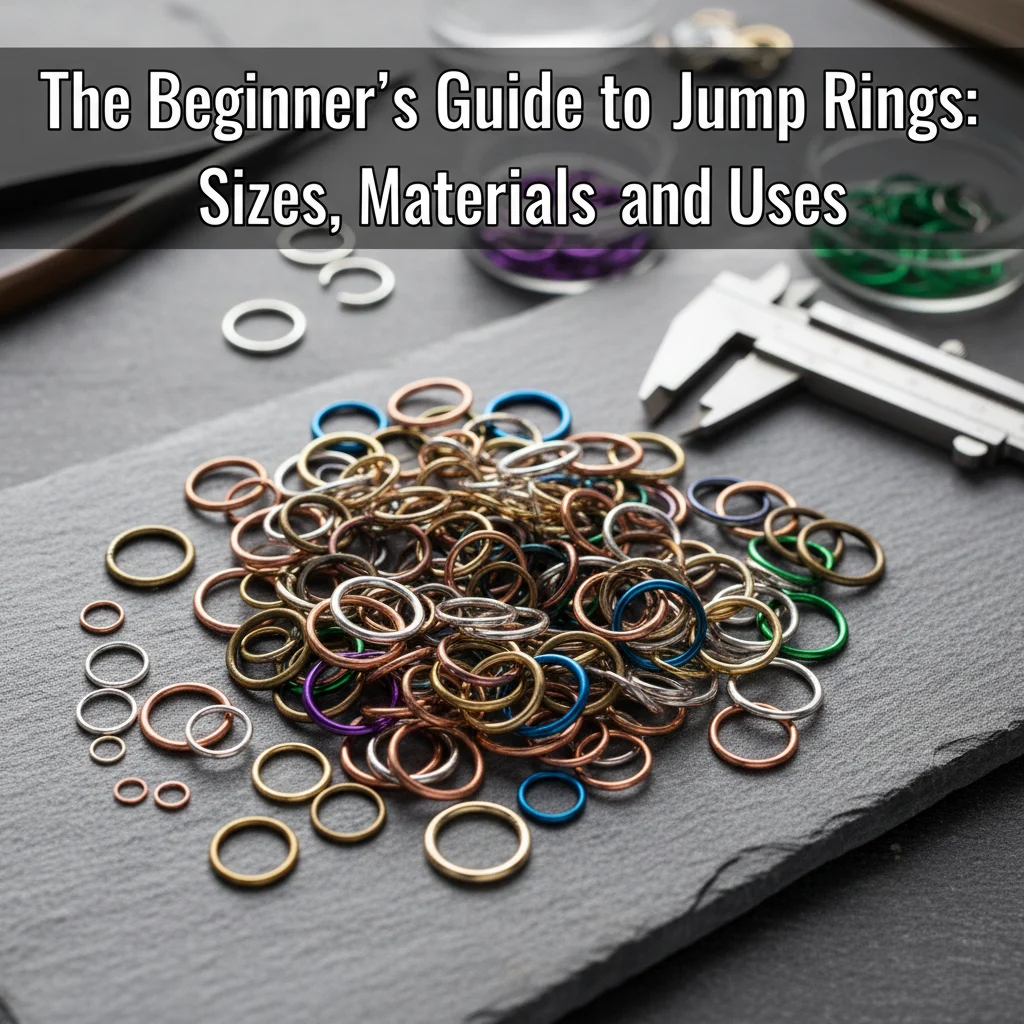
Simply put, a jump ring is a small, circular metal ring used to connect components in jewelry making. They act as a bridge between beads, charms, clasps, and other elements, allowing you to create intricate and beautiful designs. Think of them as the glue that holds your jewelry projects together!
Jump rings are typically made from wire that has been formed into a circle and then cut, leaving a small opening. This opening allows you to attach the ring to other components and then close it, creating a secure connection.
[Browse top-rated jump ring on Amazon]
## Understanding Jump Ring Sizes
Jump ring sizes are usually described in two ways:
* **Outer Diameter (OD):** This is the overall diameter of the ring, measured from one edge to the opposite edge. It’s usually expressed in millimeters (mm). Common sizes range from 3mm to 10mm or even larger for heavier pieces.
* **Wire Gauge:** This refers to the thickness of the wire used to make the jump ring. It’s expressed as a gauge number (e.g., 20 gauge, 18 gauge). The *lower* the gauge number, the *thicker* the wire. A thicker wire gauge will result in a stronger, more durable jump ring, while a thinner gauge will be more delicate.
**Why is size important?**
* **Aesthetics:** The size of your jump rings should be proportional to the other components in your jewelry. Too large, and they’ll look clunky; too small, and they might get lost in the design.
* **Strength:** The wire gauge needs to be strong enough to support the weight of the components it’s connecting. Use a thicker gauge for heavier pendants or clasps.
* **Functionality:** The inner diameter (ID) of the jump ring, which depends on both the OD and the wire gauge, needs to be large enough to easily pass through the holes in your beads or charms.
**Common Jump Ring Sizes and Their Uses:**
* **3mm – 4mm:** Ideal for delicate earrings, small charms, and connecting lightweight beads.
* **5mm – 6mm:** A versatile size for bracelets, necklaces, and connecting medium-weight components.
* **7mm – 8mm:** Good for heavier pendants, larger beads, and creating chain extensions.
* **9mm – 10mm and larger:** Used for statement pieces, chunky jewelry, and connecting large or heavy components.
[Browse top-rated jump ring on Amazon]
## Exploring Different Jump Ring Materials
Jump rings come in a variety of materials, each with its own unique properties and price point. Here’s a rundown of some of the most common options:
* **Base Metals:** These are typically the most affordable options.
* **Brass:** A yellowish metal that can be easily antiqued. It needs to be sealed to prevent tarnishing.
* **Copper:** A reddish-brown metal that is soft and malleable. It can also be antiqued but tarnishes easily.
* **Iron/Steel:** Strong and durable, often used for industrial-style jewelry. Can rust if not properly protected.
* **Plated Metals:** A base metal (like brass or copper) that has been coated with a thin layer of a more precious metal.
* **Silver Plated:** Offers the look of sterling silver at a lower cost. The plating can wear off over time, revealing the base metal underneath.
* **Gold Plated:** Similarly, provides the look of gold at a fraction of the price. The plating is also susceptible to wear.
* **Rhodium Plated:** A bright, durable plating that is resistant to tarnishing. Often used on white gold jewelry.
* **Precious Metals:** The most expensive and durable options.
* **Sterling Silver:** A popular choice for high-quality jewelry. It is relatively affordable and tarnish-resistant with proper care.
* **Gold Filled:** A layer of gold is bonded to a base metal (usually brass) using heat and pressure. It has a much thicker layer of gold than gold-plated items, making it more durable and tarnish-resistant.
* **Solid Gold:** The most expensive and luxurious option. It is extremely durable and will not tarnish.
**Choosing the Right Material:**
* **Budget:** Base metals and plated metals are the most affordable options.
* **Durability:** Precious metals and gold-filled are the most durable and tarnish-resistant.
* **Allergies:** Some people are allergic to certain metals, such as nickel. Sterling silver, gold, and surgical steel are generally hypoallergenic.
* **Aesthetics:** Consider the overall look and feel of your jewelry. Match the jump ring material to the other components in your design.
[Browse top-rated jump ring on Amazon]
## Essential Jump Ring Techniques
Now that you understand sizes and materials, let’s talk about how to actually *use* jump rings! The key to strong and secure jewelry is properly opening and closing your jump rings.
**The Proper Way to Open and Close Jump Rings:**
* **Tools You’ll Need:** Two pairs of pliers (chain-nose pliers or flat-nose pliers work best).
* **The Twist, Don’t Pull Method:**
1. Grip one side of the jump ring with one pair of pliers.
2. Grip the other side of the jump ring with the other pair of pliers.
3. **Twist** the ends of the jump ring *away* from each other, creating a small gap. *Do not pull the ends apart.* This will weaken the ring and make it difficult to close properly.
4. Attach the jump ring to the components you want to connect.
5. Using the same pliers, **twist** the ends of the jump ring *back* together until they meet perfectly. The ends should be flush with each other, with no visible gap.
**Why is this method so important?**
Pulling the ends of a jump ring apart will distort its shape and make it difficult to close properly. This will create a weak point in your jewelry that is likely to break over time. Twisting the ends preserves the ring’s shape and ensures a strong, secure closure.
**Soldering Jump Rings (Advanced Technique):**
For extra security, especially on high-stress areas of your jewelry, you can solder your jump rings closed. Soldering involves using heat and solder (a low-melting-point metal alloy) to fuse the ends of the jump ring together, creating a permanent bond. This requires some specialized equipment and skills, but it’s a valuable technique for creating durable, heirloom-quality jewelry.
[Browse top-rated jump ring on Amazon]
## Jump Ring Uses: Beyond Basic Connections
Jump rings are incredibly versatile and can be used for a wide range of jewelry-making applications. Here are just a few ideas to get you started:
* **Connecting Beads and Charms:** The most common use for jump rings is to connect beads, charms, pendants, and other decorative elements to your jewelry.
* **Attaching Clasps:** Jump rings are used to attach clasps to the ends of necklaces and bracelets.
* **Creating Chain Extensions:** Use a series of jump rings to create an adjustable chain extension for your necklaces and bracelets.
* **Making Dangles:** Create delicate dangles by attaching beads or charms to jump rings and then connecting them to earrings or necklaces.
* **Chain Maille:** Jump rings are the fundamental building blocks of chain maille jewelry. This intricate technique involves connecting hundreds or even thousands of jump rings together to create complex patterns and designs.
* **Wire Wrapping:** Jump rings can be incorporated into wire-wrapped designs to add texture and visual interest.
* **Repairing Jewelry:** Broken jump rings are a common cause of jewelry damage. Replacing a broken jump ring is a simple and affordable way to repair your favorite pieces.
[Browse top-rated jump ring on Amazon]
## Tools for the Job
To make your jump ring experience smoother, here are a few tools that I would recommend:
* **Wubbers Medium Chain Nose Pliers:** These pliers are designed with a wider, more comfortable grip. They are perfect for opening and closing jump rings. The flat, smooth jaws prevent scratching your metal. You can find them on Amazon for around $20.
* **Beadsmith Split Ring Pliers:** These pliers are specifically designed for opening split rings, which are a type of jump ring that has a double loop. They make it easy to insert your components and close the ring securely. Priced around $15 on Amazon.
[Browse top-rated jump ring on Amazon]
## Pro-Tips and FAQs
* **Always check your jump rings before using them.** Make sure the ends are flush and that there are no gaps. If you find a faulty jump ring, discard it.
* **Keep a variety of sizes and materials on hand.** This will allow you to adapt to different projects and designs.
* **Practice makes perfect!** The more you work with jump rings
[Check the latest prices and deals for jump ring on Amazon today!]


