[Get the best value jewelry wire on Amazon today!]
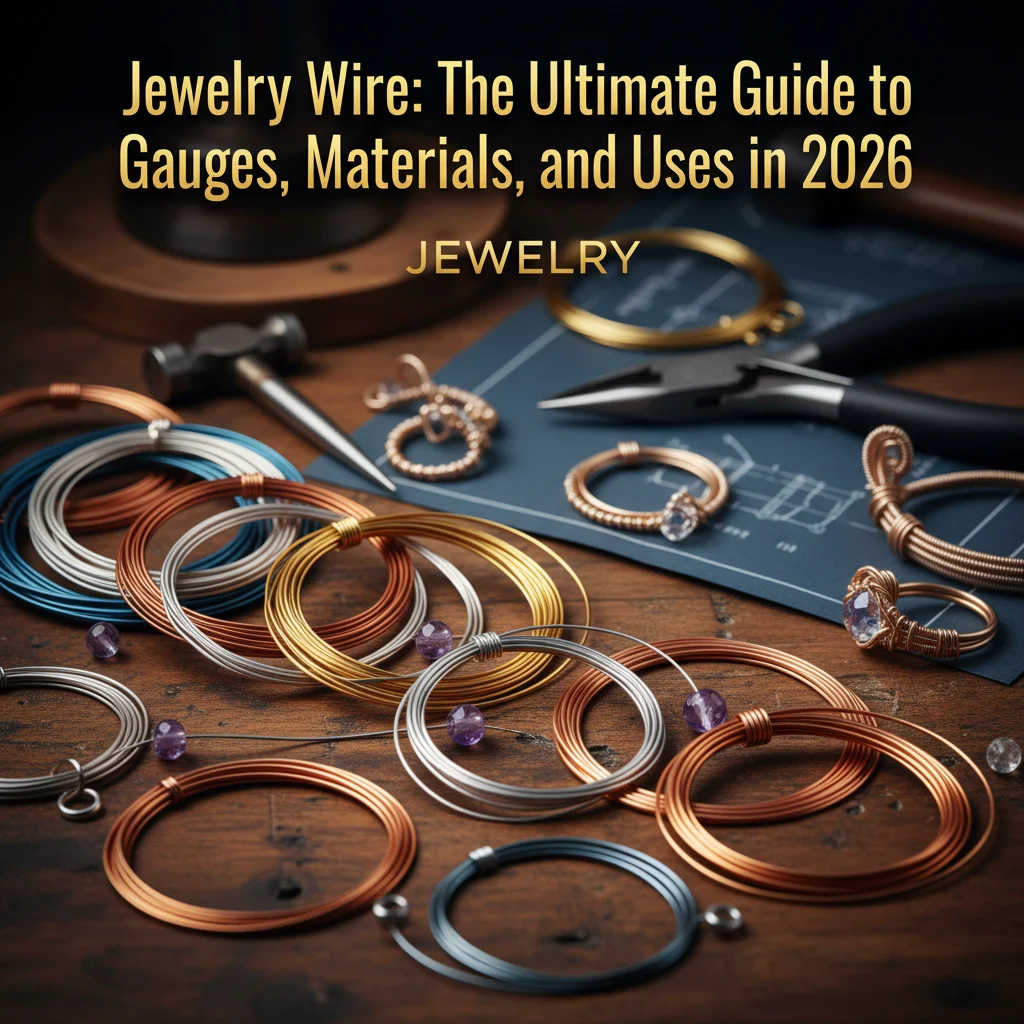
# Jewelry Wire: The Ultimate Guide to Gauges, Materials, and Uses in 2026
Jewelry making is an incredibly rewarding craft. But if you’re just starting out, navigating the world of jewelry wire can feel overwhelming. There are so many gauges, materials, and uses to consider! Don’t worry, you’re not alone. This ultimate guide will break down everything you need to know about jewelry wire in 2026, so you can confidently choose the right wire for your next project and create stunning, professional-looking jewelry.
[Browse top-rated jewelry wire on Amazon]
## Understanding Jewelry Wire Gauges
The gauge of jewelry wire refers to its thickness. The higher the gauge number, the thinner the wire. This might seem counterintuitive, but it’s important to remember! Choosing the right gauge is crucial for the strength and appearance of your jewelry.
* **28-30 Gauge:** These are super fine wires, almost like thread. They’re ideal for delicate bead weaving, wire wrapping tiny beads, and creating intricate details. They are very flexible but not very strong.
* **24-26 Gauge:** Still relatively thin, these gauges are great for bead stringing, delicate wire wrapping, and creating lightweight earrings. They offer a good balance of flexibility and strength.
* **20-22 Gauge:** A versatile mid-range gauge suitable for a variety of projects, including wire wrapping, making ear wires, creating jump rings, and simple chainmaille. This is a good starting point for beginners.
* **18 Gauge:** This is a thicker wire that provides more strength and durability. It’s often used for making heavier earrings, bracelets, and necklace components. It’s also good for creating sturdy wire frames.
* **16 Gauge and Thicker:** These are heavy-duty wires used for creating strong, structural elements in jewelry, such as cuffs, bangles, and clasps. They require more force to bend and shape.
Choosing the right gauge depends on the project’s requirements. If you’re working with delicate beads, a thinner gauge is best. For pieces that need more strength, opt for a thicker gauge. Consider the weight of the components and the overall design of the piece.
[Browse top-rated jewelry wire on Amazon]
## Exploring Different Jewelry Wire Materials
The material of jewelry wire affects its appearance, durability, and workability. Here’s a look at some of the most popular options:
* **Copper:** Copper wire is affordable, readily available, and easy to work with. It’s a great choice for beginners. It has a warm, reddish-brown color that can be enhanced with patinas. However, it can tarnish over time, so it needs to be sealed or polished regularly.
* **Brass:** Brass wire is another affordable option with a slightly more golden color than copper. It’s also easy to work with and can be patinated. Like copper, it’s prone to tarnishing.
* **Sterling Silver:** Sterling silver wire is a popular choice for high-quality jewelry. It has a bright, shiny appearance and is more durable than copper or brass. It does tarnish, but it’s easy to polish back to its original shine. Sterling silver is a good option for those with sensitive skin.
* **Fine Silver:** Fine silver is 99.9% pure silver, making it softer and more tarnish-resistant than sterling silver. It has a brighter, whiter color. It’s often used for wire weaving and creating delicate designs. Because it is so soft, it may not be suitable for pieces needing a lot of structural integrity.
* **Gold-Filled:** Gold-filled wire consists of a base metal (usually brass) with a thick layer of gold bonded to the surface. It offers the look of gold at a more affordable price. It’s durable and tarnish-resistant.
* **Gold Plated:** Gold-plated wire has a thin layer of gold electroplated onto a base metal. It’s the least expensive option but the gold plating can wear off over time, exposing the base metal.
* **Anodized Aluminum:** Anodized aluminum wire is lightweight, strong, and available in a wide range of colors. It’s a good choice for creating colorful and contemporary jewelry designs. It won’t tarnish, but it can scratch.
* **Stainless Steel:** Stainless steel wire is extremely strong, durable, and tarnish-resistant. It’s a good choice for pieces that need to withstand wear and tear. It can be more difficult to work with than softer metals like copper or silver.
* **Artistic Wire:** Artistic wire is a copper wire that has been permanently colored and coated with a tarnish-resistant finish. It’s available in a huge variety of colors and gauges. It’s a fun and affordable option for experimenting with different designs. However, the coating can chip or scratch with excessive wear.
Consider the desired look, durability, and budget when choosing the right material for your jewelry wire. If you’re selling your jewelry, it’s important to use high-quality materials that will last.
[Browse top-rated jewelry wire on Amazon]
## Essential Uses of Jewelry Wire
Jewelry wire is incredibly versatile and can be used for a wide range of jewelry-making techniques. Here are some of the most common uses:
* **Wire Wrapping:** Wire wrapping involves using wire to secure beads, stones, and other components together. It can be used to create pendants, earrings, bracelets, and more. Different gauges and materials can be used to create different looks and textures.
* **Bead Stringing:** Jewelry wire can be used to string beads together to create necklaces, bracelets, and anklets. Thinner gauges are typically used for bead stringing.
* **Making Ear Wires:** Creating your own ear wires allows you to customize the size, shape, and material. 20-22 gauge wire is commonly used for ear wires.
* **Creating Jump Rings:** Jump rings are small, circular rings used to connect different components in jewelry. They can be made from jewelry wire using pliers and a mandrel. 18-20 gauge wire is a good choice for jump rings.
* **Chainmaille:** Chainmaille involves creating intricate patterns by linking together individual rings of wire. Different gauges and materials can be used to create different textures and weights.
* **Wire Weaving:** Wire weaving involves interlacing wires to create intricate designs. This technique can be used to create pendants, bracelets, and other decorative elements.
* **Sculptural Jewelry:** Thicker gauges of jewelry wire can be used to create sculptural jewelry pieces, such as cuffs, bangles, and pendants.
* **Creating Bezels:** Jewelry wire can be used to create bezels to hold stones and cabochons in place.
No matter what your jewelry-making style, jewelry wire is an essential tool. Experiment with different techniques and materials to discover your own unique style.
[Browse top-rated jewelry wire on Amazon]
## Tools for Working with Jewelry Wire
Having the right tools is essential for working with jewelry wire. Here are some of the basic tools you’ll need:
* **Round-Nose Pliers:** Round-nose pliers are used for creating loops and curves in wire. They are essential for making ear wires, jump rings, and wire-wrapped components.
* **Chain-Nose Pliers:** Chain-nose pliers have flat jaws that are used for gripping and manipulating wire. They are useful for opening and closing jump rings, bending wire, and creating sharp angles.
* **Flush Cutters:** Flush cutters are used for cutting jewelry wire cleanly and precisely. They are essential for creating professional-looking jewelry.
* **Wire Straightener:** A wire straightener is used to straighten wire that has been bent or coiled. This is especially useful for working with wire that has been stored on a spool.
* **Nylon-Jaw Pliers:** Nylon-jaw pliers have nylon jaws that won’t scratch or damage the surface of the wire. They are useful for straightening wire and manipulating delicate components.
**Product Recommendation:** The **Beadsmith Jewelry Pliers Set** is a great starter kit that includes round-nose pliers, chain-nose pliers, and flush cutters. These are good quality tools at an affordable price point, making them perfect for beginners. The ergonomic handles make them comfortable to use for extended periods, and the spring-loaded mechanism reduces hand fatigue.
* **Why We Like It:** This set provides all the essential tools you need to get started with jewelry making. The pliers are well-made and durable, and the flush cutters create clean, precise cuts.
[Browse top-rated jewelry wire on Amazon]
## Pro Tips for Working with Jewelry Wire
* **Annealing:** Annealing is the process of heating metal to soften it and make it easier to work with. This is especially useful for working with thicker gauges of wire. Copper and silver wire can be annealed using a butane torch.
* **Work Hardening:** Work hardening is the process of making metal harder and more brittle by repeatedly bending or hammering it. This can be useful for creating stronger components, but it can also make the wire more prone to breaking.
* **Tarnishing:** Most jewelry wire will tarnish over time. To prevent tarnishing, store your jewelry in airtight containers or bags. You can also use anti-tarnish cloths to polish your jewelry.
* **Practice:** The best way to improve your jewelry-making skills is to practice. Start with simple projects and gradually work your way up to more complex designs.
* **Experiment:** Don’t be afraid to experiment with different techniques and materials. The possibilities are endless!
[Browse top-rated jewelry wire on Amazon]
## FAQ About Jewelry Wire
* **What is the best jewelry wire for beginners?** Copper and brass wire are great choices for beginners because
[Check the latest prices and deals for jewelry wire on Amazon today!]


