[Get the best value japanese lucky charms on Amazon today!]
# Japanese Lucky Charms: Meanings and Where to Buy in 2026
Japanese lucky charms, or *engimono* (縁起物), are more than just cute trinkets; they are tangible symbols of hope, good fortune, and protection. Whether you’re looking to boost your luck in love, career, health, or studies, there’s a Japanese lucky charm designed to attract positive energy into your life. This guide will delve into the meanings behind some of the most popular Japanese lucky charms and point you towards where you can find authentic ones in 2026. Let’s unlock the secrets of these fascinating talismans and discover how they can bring a touch of Japanese good fortune into your world.
[Browse top-rated japanese lucky charms on Amazon]
## Understanding the Power of Japanese Lucky Charms
The belief in lucky charms is deeply ingrained in Japanese culture, stemming from a blend of Shinto and Buddhist traditions. These charms are not seen as magical objects but rather as reminders to stay positive, work hard, and be open to opportunities. They serve as a constant source of encouragement and can help you focus your intentions on achieving your goals. Each charm carries a unique symbolism, often tied to specific deities, animals, or historical figures, making them potent symbols of good luck.
[Browse top-rated japanese lucky charms on Amazon]
## Popular Japanese Lucky Charms and Their Meanings
Here’s a breakdown of some of the most beloved *engimono* you’ll encounter:
### Maneki Neko (招き猫) – The Beckoning Cat
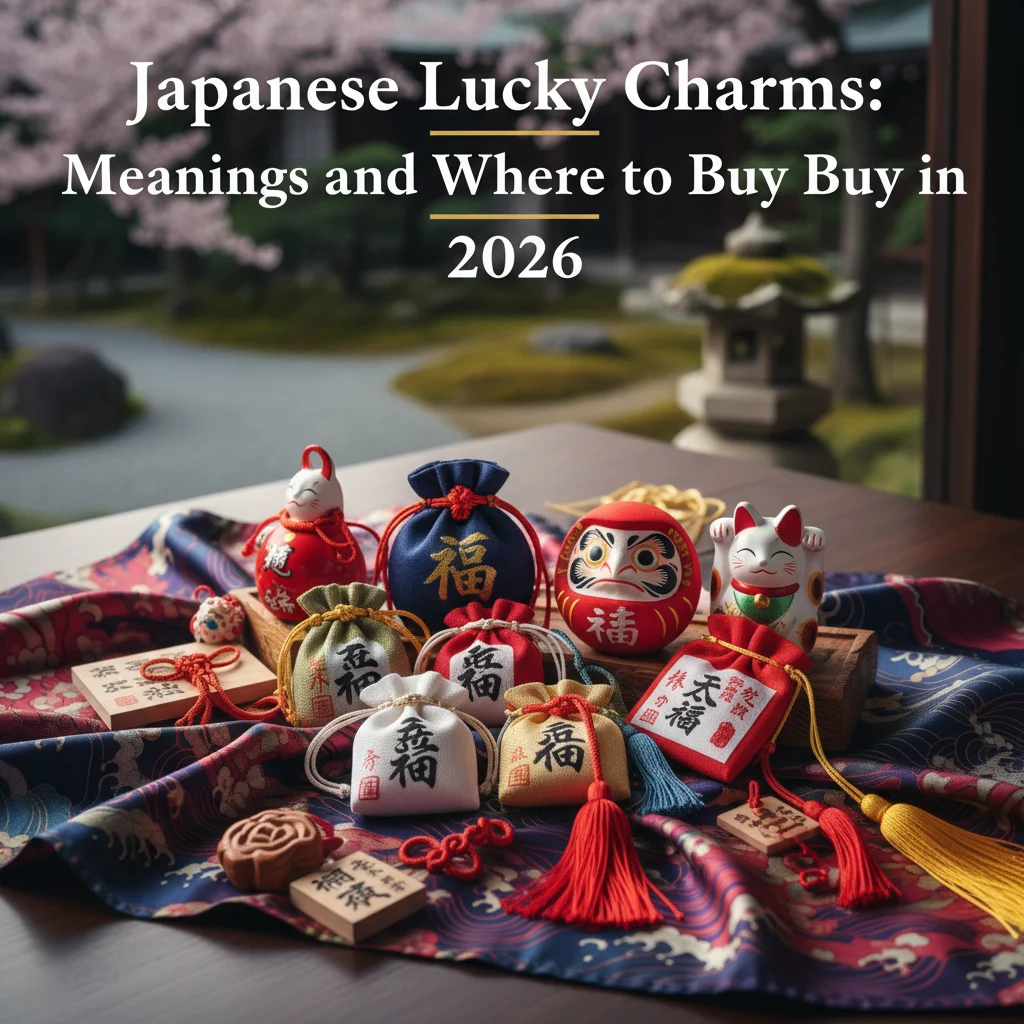
* **Meaning:** Perhaps the most recognizable Japanese lucky charm, the Maneki Neko is believed to bring good fortune and wealth to its owner. The raised paw is said to beckon customers and opportunities.
* **Variations:** The color of the Maneki Neko can also influence its specific benefits. A white cat represents purity and happiness, a black cat wards off evil, a gold cat attracts wealth, and a red cat brings good health. The paw that’s raised also matters; the right paw beckons money, while the left paw beckons customers.
* **Where to Place:** Businesses often display Maneki Neko near the entrance to attract customers. At home, placing it in a visible area can invite positive energy.
### Daruma Doll (達磨)
* **Meaning:** The Daruma doll represents perseverance and determination. Inspired by Bodhidharma, the founder of Zen Buddhism, these dolls are typically sold without eyes. When you set a goal, you paint in one eye. Once you achieve your goal, you paint in the other.
* **Symbolism:** The doll’s round shape symbolizes resilience, as it always returns to an upright position when knocked over, representing the ability to overcome obstacles.
* **Color Significance:** Different colors of Daruma dolls represent different types of luck. Red is the most common and represents general good fortune. Other colors include yellow for security, white for love, and black for protection.
* **How to Use:** Place the Daruma doll in a prominent location where you’ll see it regularly, reminding you of your goal.
### Omamori (お守り) – Amulets
* **Meaning:** *Omamori* are protective amulets sold at Shinto shrines and Buddhist temples. They are believed to provide various forms of protection, such as safety during travel, success in exams, good health, and luck in love.
* **Types:** There are *omamori* for virtually every aspect of life. Common types include *kotsu anzen* (traffic safety), *gakugyo joju* (academic success), *en-musubi* (love and relationships), and *byoki heiyu* (recovery from illness).
* **Respectful Handling:** *Omamori* should be treated with respect and kept clean. They should be carried with you or placed in a safe location. It’s important not to open them, as this is believed to release the protective power.
* **Replacement:** *Omamori* are typically replaced annually. Old *omamori* are usually returned to the shrine or temple where they were purchased to be respectfully burned.
### Ema (絵馬) – Votive Tablets
* **Meaning:** *Ema* are small wooden plaques on which you can write your wishes or prayers. They are then hung at a Shinto shrine or Buddhist temple, where the deities or Buddhas are believed to receive and grant your requests.
* **Design:** *Ema* often feature images of animals associated with the zodiac or popular deities.
* **How to Use:** Write your wish clearly and respectfully on the *ema* and hang it in the designated area at the shrine or temple.
### Kitsune (狐) – Fox
* **Meaning:** Foxes are considered messengers of Inari, the Shinto god of rice, prosperity, and success. Statues of foxes are often found at Inari shrines, and fox-shaped charms are believed to bring good fortune in business and agriculture.
* **Symbolism:** Foxes are also associated with intelligence, cunning, and protection from evil spirits.
### Tanuki (狸) – Raccoon Dog
* **Meaning:** Tanuki are mischievous but benevolent creatures in Japanese folklore. They are often depicted with a large belly, a straw hat, and a sake bottle. They are believed to bring good luck in business, particularly in sales and financial prosperity.
* **Symbolism:** Each aspect of the Tanuki’s appearance has a symbolic meaning. The large belly represents boldness and decisiveness, the straw hat protects from bad luck, and the sake bottle symbolizes generosity.
### Omikuji (おみくじ) – Fortune Slips
* **Meaning:** *Omikuji* are random fortune slips drawn at Shinto shrines and Buddhist temples. They predict your luck in various aspects of life, such as health, love, and career.
* **Interpretation:** The *omikuji* will typically include a general fortune (e.g., great blessing, good blessing, small blessing) and specific advice on various aspects of your life.
* **What to Do:** If you receive a good fortune, you can keep the *omikuji* as a reminder of good luck. If you receive a bad fortune, you can tie the *omikuji* to a designated tree or rack at the shrine or temple, symbolizing leaving the bad luck behind.
### Koinobori (鯉のぼり) – Carp Streamers
* **Meaning:** While primarily decorations for Children’s Day (May 5th), Koinobori represent strength, courage, and perseverance. They are carp-shaped streamers flown from poles, symbolizing the carp’s legendary ability to swim upstream and transform into a dragon.
* **Symbolism:** The different colored carp represent different members of the family. A black carp represents the father, a red carp represents the mother, and smaller carp represent the children.
### Shisa (シーサー) – Lion Dogs
* **Meaning:** Originating from Okinawa, Shisa are lion-dog figures believed to ward off evil spirits. They are often placed in pairs, with one having an open mouth to ward off evil and the other having a closed mouth to keep good luck in.
* **Placement:** Shisa are typically placed on rooftops or near entrances to homes and businesses.
[Browse top-rated japanese lucky charms on Amazon]
## Where to Buy Authentic Japanese Lucky Charms in 2026
Finding authentic Japanese lucky charms requires a little research and planning. Here are some reliable places to source your *engimono* in 2026:
### Visiting Shrines and Temples in Japan
The most authentic way to acquire Japanese lucky charms is to visit Shinto shrines and Buddhist temples in Japan. Most shrines and temples sell *omamori*, *ema*, and *omikuji*. You can also find unique charms specific to that particular location.
* **Popular Shrines and Temples:** Some popular destinations for purchasing lucky charms include:
* **Senso-ji Temple (Tokyo):** One of Tokyo’s oldest temples, offering a wide variety of *omamori* and other charms.
* **Meiji Jingu Shrine (Tokyo):** A peaceful oasis in the heart of Tokyo, known for its beautiful gardens and traditional *omamori*.
* **Fushimi Inari Shrine (Kyoto):** Famous for its thousands of red torii gates, this shrine is dedicated to Inari, the god of rice and prosperity, and offers a variety of fox-themed charms.
* **Kiyomizu-dera Temple (Kyoto):** A UNESCO World Heritage site with stunning views and a wide selection of *omamori*.
### Online Retailers Specializing in Japanese Goods
If you can’t travel to Japan, several online retailers specialize in importing and selling authentic Japanese goods, including lucky charms.
* **Amazon Japan:** While you might find some options on the regular Amazon, Amazon Japan often has a more curated and authentic selection. Be sure to check seller reviews and product descriptions carefully.
* **Etsy:** Many independent artisans and small businesses sell handmade and authentic Japanese lucky charms on Etsy. Look for sellers with positive reviews and clear descriptions of their products’ origins.
* **Specialty Import Shops:** Search for online retailers that specialize in importing Japanese goods. These shops often have a more carefully selected inventory and can provide more information about the origins and authenticity of their products.
### Japanese Cultural Events and Festivals
Keep an eye out for Japanese cultural events and festivals in your area. These events often feature vendors selling authentic Japanese goods, including lucky charms.
### Japanese Grocery Stores and Bookstores
Some Japanese grocery stores and bookstores may carry a small selection of lucky
[Check the latest prices and deals for japanese lucky charms on Amazon today!]


