[Get the best value off the hook yarn on Amazon today!]
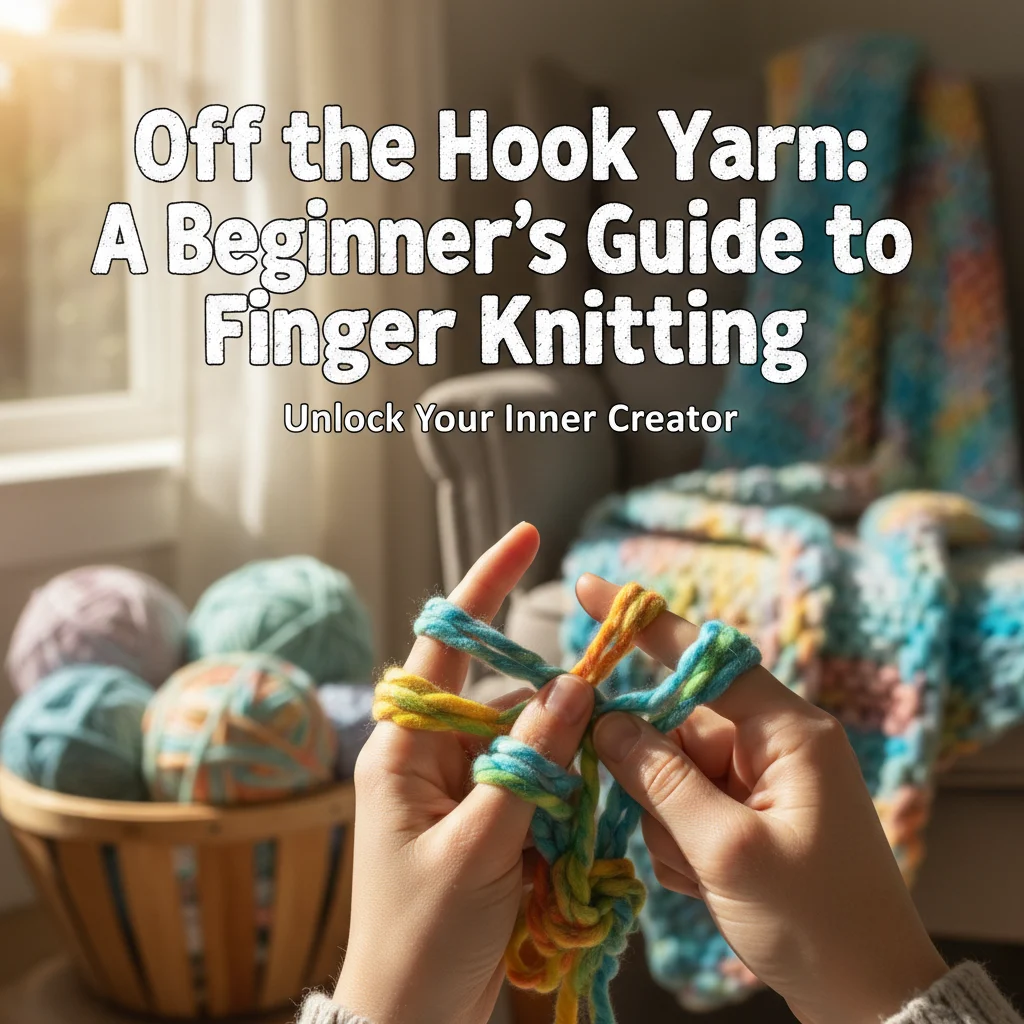
# Off the Hook Yarn: A Beginner’s Guide to Finger Knitting
Ready to ditch the needles and hooks? Finger knitting with off the hook yarn is your ticket to cozy creations without the fuss. If you’ve been itching to try a new craft that’s both relaxing and rewarding, you’ve come to the right place. This guide will walk you through everything you need to know to get started with off the hook yarn and finger knitting, from choosing your yarn to creating your first project.
[Browse top-rated off the hook yarn on Amazon]
## What is Off the Hook Yarn and Why Finger Knitting?
Off the hook yarn, often referred to as loop yarn or stitch yarn, is a unique type of yarn designed specifically for finger knitting. Instead of using traditional knitting needles or crochet hooks, this yarn features pre-formed loops that you interlock with your fingers to create fabric. This makes it incredibly beginner-friendly and accessible to people of all ages and skill levels.
Why choose finger knitting with off the hook yarn?
* **Beginner-Friendly:** No prior knitting or crocheting experience is required. The pre-formed loops make it easy to learn the basic stitch.
* **Quick Results:** Projects work up remarkably fast. You can create a scarf or small blanket in just a few hours.
* **Relaxing and Therapeutic:** The repetitive motion of finger knitting can be incredibly soothing and meditative.
* **No Needles or Hooks:** Say goodbye to bulky tools! All you need is your yarn and your hands.
* **Versatile:** You can make a wide variety of projects, from blankets and scarves to pillows and even toys.
[Browse top-rated off the hook yarn on Amazon]
## Step-by-Step Guide to Finger Knitting with Off the Hook Yarn
Ready to dive in? Follow these simple steps to start your first finger knitting project with off the hook yarn.
### Step 1: Getting Started – Creating Your First Row
1. **Unravel a Length of Yarn:** Pull out a length of off the hook yarn, leaving about 12 inches free at the end. This will be your starting tail.
2. **Form Your First Loop:** Hold the yarn in your non-dominant hand. Take the first loop of yarn and pull it through the *next* loop on the strand. This creates your first stitch on your non-dominant hand.
3. **Continue the Chain:** Repeat this process, pulling each subsequent loop through the next, until you have a row of loops across your hand. The number of loops will determine the width of your project. For a scarf, 10-15 loops is a good starting point. For a blanket, you might use 30-40 loops or more.
4. **Secure the End:** Once you have the desired number of loops, secure the last loop by pulling the working yarn tail through it. This prevents the row from unraveling.
### Step 2: Knitting Your Second Row
1. **Turn Your Work:** Rotate your work 180 degrees. The secured end of your first row should now be on your non-dominant hand.
2. **Begin the Second Row:** Now, you’ll be working *backwards*. Take the first loop on the working yarn and pull it *through* the first loop on your non-dominant hand (the one you just secured).
3. **Continue Across the Row:** Repeat this process, pulling each loop of the working yarn through the corresponding loop on your non-dominant hand. This creates your second row of knitting.
4. **Maintain Tension:** Keep a consistent tension as you knit. Too tight, and your project will be stiff; too loose, and it will be floppy. Aim for a comfortable, even tension.
### Step 3: Continuing to Knit Your Project
1. **Turn and Repeat:** Once you’ve completed the second row, turn your work again and repeat the process from Step 2. Continue knitting row after row until your project reaches the desired length.
2. **Add New Skeins of Yarn:** When you reach the end of a skein of yarn, simply tie a new skein to the end of the old one, leaving a small tail. You can weave these tails into your finished project to hide them.
3. **Experiment with Colors:** Get creative! Use different colors of off the hook yarn to create stripes, patterns, or even intricate designs.
### Step 4: Finishing Your Project
1. **Bind Off:** When your project is the desired length, it’s time to bind off, which secures the final row and prevents it from unraveling.
2. **Binding Off Steps:** Instead of pulling the working yarn loop through the loop on your hand, pull the *next* loop on your hand *through* the current loop. This effectively connects the loops together. Continue this process across the entire row until you have only one loop left.
3. **Secure the Final Loop:** Cut the yarn, leaving a tail of about 6 inches. Pull the tail through the last loop and tighten to secure.
4. **Weave in the Ends:** Use a large-eyed needle or your fingers to weave the yarn tails into the back of your project. This hides the tails and prevents them from coming undone.
[Browse top-rated off the hook yarn on Amazon]
## Tools for the Job: Essential Off the Hook Yarn Supplies
While finger knitting is all about using your hands, there are a few tools that can make the process even easier and help you achieve professional-looking results.
### Off the Hook Yarn by Yarnspirations
This is the quintessential off the hook yarn and an excellent choice for beginners.
* **Key Features:** This incredibly soft and plush chenille-style yarn features pre-formed loops that are perfectly spaced for easy finger knitting. Available in a wide array of colors, from classic neutrals to vibrant brights, this yarn is ideal for creating cozy blankets, scarves, pillows, and more. It’s also machine washable and dryable, making it a practical choice for projects that will be used and loved.
* **Why We Recommend It:** The consistent loop size and softness of this yarn make it a joy to work with, even for complete beginners. The wide color selection allows for endless creative possibilities, and the machine-washable nature ensures that your finished projects will be easy to care for.
### Large-Eyed Tapestry Needle
While not strictly necessary, a large-eyed tapestry needle can be incredibly helpful for weaving in the ends of your yarn. This will give your finished project a clean, professional look.
* **Key Features:** A large eye that easily accommodates the thick strands of off the hook yarn, a blunt tip to prevent snagging, and a sturdy construction that can withstand repeated use.
* **Why We Recommend It:** Weaving in the ends of your yarn can be a bit fiddly, especially with thicker yarns like off the hook yarn. A large-eyed tapestry needle makes this process much easier and more efficient, resulting in a neater and more polished finished product.
[Browse top-rated off the hook yarn on Amazon]
## Pro-Tips / FAQ Section
* **What if I drop a loop?** Don’t panic! Simply pick up the dropped loop and reattach it to the working yarn. You may need to tighten the surrounding loops to even out the tension.
* **How do I fix a mistake?** If you notice a mistake early on, you can carefully unravel the rows until you reach the error. Then, re-knit the rows correctly.
* **Can I use different types of yarn for finger knitting?** While off the hook yarn is specifically designed for finger knitting, you can experiment with other types of bulky yarn. However, the results may not be as consistent or easy to achieve.
* **How do I wash my finger-knitted project?** Most off the hook yarns are machine washable and dryable. However, it’s always best to check the care instructions on the yarn label before washing your project.
* **My project is too tight/loose. What am I doing wrong?** Tension is key! If your project is too tight, try loosening your grip on the yarn as you knit. If it’s too loose, try tightening your grip slightly. Practice makes perfect!
* **How much yarn do I need for a project?** The amount of yarn you need will depend on the size and type of project you’re making. Refer to the yarn label or a pattern for specific yarn requirements. As a general rule, a scarf will require 2-3 skeins of off the hook yarn, while a small blanket may require 5-7 skeins.
[Browse top-rated off the hook yarn on Amazon]
## Encouraging Conclusion
Congratulations! You’ve now learned the basics of finger knitting with off the hook yarn. With a little practice, you’ll be creating beautiful and cozy projects in no time. Don’t be afraid to experiment with different colors, patterns, and techniques to create your own unique designs. So grab some yarn, get comfortable, and let your creativity flow! You’ll be amazed at what you can create with just your fingers and a little bit of imagination. Happy Knitting!
[Check the latest prices and deals for off the hook yarn on Amazon today!]


