[Get the best value barbless hook on Amazon today!]
# Barbless Hooks: The 2026 Guide to Catch and Release Fishing
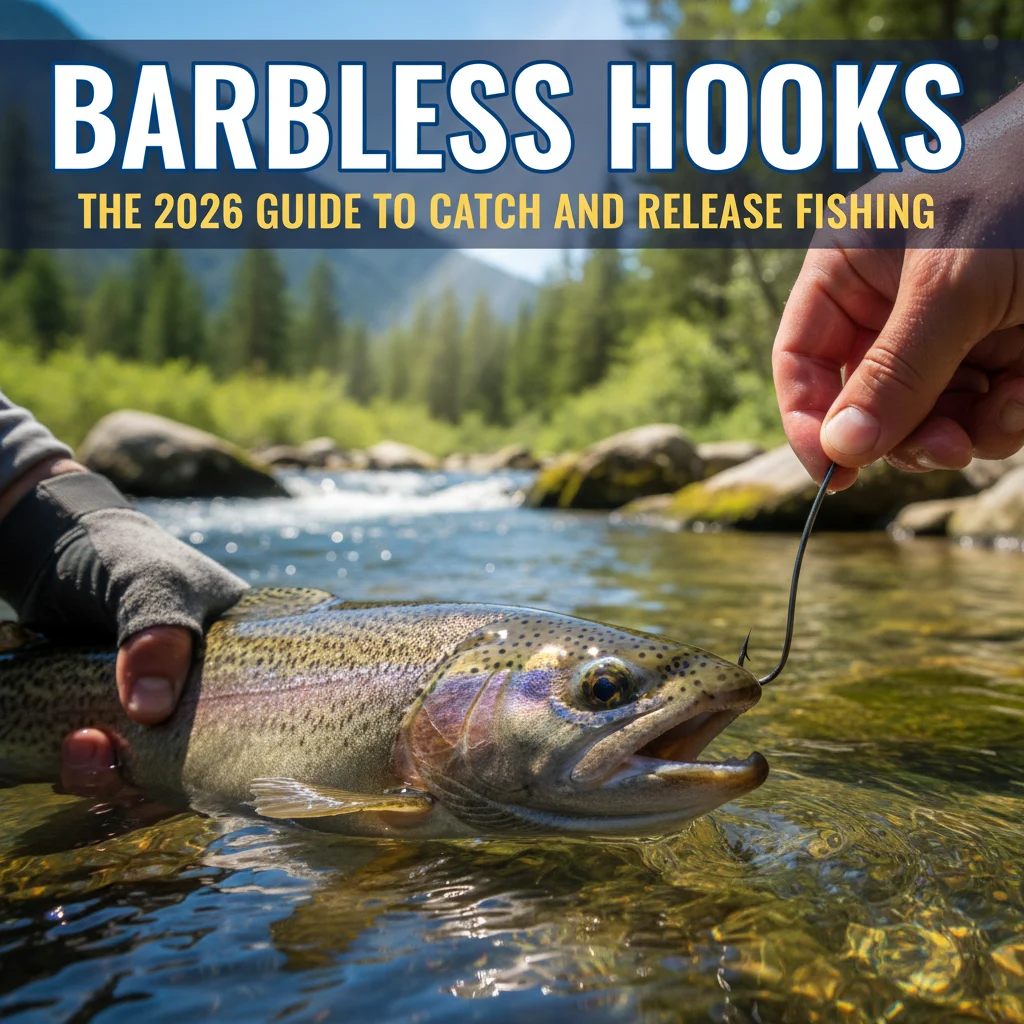
Catch and release fishing is more popular than ever, and for good reason. It allows us to enjoy the thrill of the catch while minimizing our impact on fish populations. But to truly practice ethical catch and release, understanding the **barbless hook** is essential. This guide will walk you through everything you need to know about **barbless hooks** in 2026, covering their benefits, how to use them effectively, and why they’re a cornerstone of responsible angling. Whether you’re a seasoned angler or just starting out, this comprehensive guide will equip you with the knowledge to make informed decisions and practice catch and release with confidence.
[Browse top-rated barbless hook on Amazon]
## Why Choose Barbless Hooks?
The primary reason anglers switch to **barbless hooks** is to reduce injury to the fish. The barb on a traditional hook, that small, backward-facing projection, is designed to keep the hook securely in place. While effective, it can also cause significant damage when removed, tearing tissue and increasing the risk of infection.
**Here’s a breakdown of the key benefits:**
* **Reduced Injury:** **Barbless hooks** penetrate just as effectively as barbed hooks but cause far less trauma upon removal. This significantly increases the fish’s chances of survival after release.
* **Easier Removal:** Removing a **barbless hook** is much quicker and easier. This minimizes the time the fish is out of the water, reducing stress and improving its recovery.
* **Faster Hooksets:** Some anglers argue that **barbless hooks** actually improve hookset speed. Because there’s no barb to overcome, the hook can penetrate faster and cleaner.
* **Ethical Angling:** Using **barbless hooks** demonstrates a commitment to responsible fishing practices and the conservation of fish populations.
* **They’re Often Required:** Many waters, particularly those with sensitive fish populations, now *require* the use of **barbless hooks**. Knowing how to use them is essential for fishing legally and ethically in these areas.
[Browse top-rated barbless hook on Amazon]
## Understanding Different Types of Barbless Hooks
While the core principle remains the same – the absence of a barb – **barbless hooks** come in various shapes, sizes, and materials to suit different fishing techniques and species. Here’s a look at some common types:
* **Traditional Barbless Hooks:** These are specifically manufactured without a barb. They’re readily available in most tackle shops and offer a reliable and consistent barbless option.
* **Crimped Barbed Hooks:** A barbed hook can be converted into a **barbless hook** by carefully crimping the barb down with pliers. This is a convenient option if you already have barbed hooks on hand, but it’s crucial to ensure the barb is completely flattened to avoid causing injury.
* **Circle Hooks (Barbless):** Circle hooks are designed to hook fish in the corner of the mouth, making them ideal for catch and release. When combined with a **barbless** design, they offer a very fish-friendly option.
* **Single Hooks (Barbless):** Single hooks, as opposed to treble hooks, are generally preferred for catch and release due to their ease of removal and reduced potential for injury. **Barbless** single hooks are even better.
* **Wide Gap Hooks (Barbless):** These hooks have a wider gap between the point and the shank, making them suitable for bulkier baits. The **barbless** version is excellent for targeting larger fish while minimizing harm.
[Browse top-rated barbless hook on Amazon]
## How to Effectively Use Barbless Hooks: A Step-by-Step Guide
Using **barbless hooks** effectively requires a slight adjustment to your fishing technique. Here’s a step-by-step guide to ensure successful hookups and clean releases:
### Step 1: Choose the Right Hook Size and Style
Selecting the appropriate hook size and style is crucial for any type of fishing, but it’s especially important when using **barbless hooks**. Match the hook size to the size of the bait and the species you’re targeting. Consider the type of fishing you’ll be doing (e.g., fly fishing, bait fishing, lure fishing) and choose a **barbless hook** designed for that specific technique.
### Step 2: Sharpen Your Hooks Regularly
A sharp hook is essential for quick and secure hooksets, especially with **barbless hooks**. Regularly check the hook point for sharpness and use a hook sharpener to maintain a razor-sharp edge. A dull **barbless hook** will require more force to penetrate, increasing the risk of a missed hookset and potentially injuring the fish.
### Step 3: Maintain Constant Tension
Maintaining constant tension on the line is critical when using **barbless hooks**. Unlike barbed hooks, which rely on the barb to keep the hook in place, **barbless hooks** depend on continuous pressure to stay embedded. Avoid slack in the line and be prepared to react quickly to any movement or pull on the line.
### Step 4: Set the Hook with a Swift, Deliberate Motion
When you feel a bite, set the hook with a swift, deliberate motion. A strong hookset will ensure that the **barbless hook** penetrates firmly. Avoid jerky or hesitant hooksets, as these can result in a missed opportunity.
### Step 5: Fight the Fish with Confidence
Once the fish is hooked, fight it with confidence and control. Maintain constant tension on the line and avoid sudden movements that could dislodge the **barbless hook**. Use smooth, steady pressure to tire the fish and bring it to the net.
### Step 6: Remove the Hook Quickly and Carefully
Once you’ve landed the fish, remove the **barbless hook** quickly and carefully. Use pliers or forceps to gently dislodge the hook, minimizing any further stress or injury to the fish. If the hook is deeply embedded, consider cutting the line as close to the hook as possible rather than attempting to remove it, as this will often cause less damage.
### Step 7: Handle the Fish with Respect
Handle the fish with wet hands to protect its delicate slime coat. Avoid placing the fish on dry surfaces or squeezing it tightly. Keep the fish in the water as much as possible and minimize the amount of time it’s out of the water.
### Step 8: Release the Fish Gently
Release the fish gently back into the water, ensuring it’s fully revived before letting it swim away. Hold the fish upright in the water until it regains its strength and swims off on its own. If the fish appears disoriented or exhausted, continue to support it until it’s fully recovered.
[Browse top-rated barbless hook on Amazon]
## Tools for the Job: Recommended Products for Barbless Hook Fishing
To maximize your success and minimize harm to the fish when using **barbless hooks**, consider these recommended products:
* **Pliers with Hook Remover:** These pliers are designed with a specialized hook remover that allows you to quickly and easily dislodge **barbless hooks** without causing unnecessary trauma to the fish. Look for pliers with a comfortable grip and corrosion-resistant materials.
* **Key Features:** Stainless steel construction, ergonomic handle, built-in hook remover.
* **Why We Like It:** The integrated hook remover makes it easy to remove hooks quickly and efficiently, minimizing the time the fish is out of the water.
* **Hook Sharpener:** A high-quality hook sharpener is essential for maintaining the sharpness of your **barbless hooks**. Choose a sharpener with multiple sharpening surfaces to accommodate different hook sizes and styles.
* **Key Features:** Diamond-coated sharpening surfaces, multiple sharpening grooves, compact and portable design.
* **Why We Like It:** A sharp hook is crucial for successful hooksets with **barbless hooks**, and this sharpener makes it easy to maintain a razor-sharp edge.
[Browse top-rated barbless hook on Amazon]
## Pro-Tips for Barbless Hook Success
* **Practice Makes Perfect:** It may take some time to adjust to using **barbless hooks**, so don’t get discouraged if you miss a few hooksets at first. Practice regularly and experiment with different techniques to find what works best for you.
* **Use High-Quality Line:** A strong, reliable fishing line is essential for maintaining tension and fighting fish effectively with **barbless hooks**. Choose a line that’s appropriate for the species you’re targeting and the fishing conditions you’ll be facing.
* **Consider Using Circle Hooks:** Circle hooks are designed to hook fish in the corner of the mouth, making them ideal for catch and release. When combined with a **barbless** design, they offer a very fish-friendly option.
* **Be Prepared for Missed Hooksets:** **Barbless hooks** may result in slightly more missed hooksets than barbed hooks, so be prepared to react quickly and set the hook multiple times if necessary.
* **Observe the Fish:** Pay close attention to the fish’s behavior after release. If it appears disoriented or exhausted, continue to support it until it’s fully recovered.
[Browse top-rated barbless hook on Amazon]
## Frequently Asked Questions About Barbless Hooks
* **Do barbless hooks really reduce injury to fish?** Yes, studies have shown that **barbless hooks** significantly reduce injury to fish compared to barbed hooks. The absence of a barb makes removal much easier and less traumatic.
* **Are barbless hooks required in all waters?** No, **barbless hooks** are not required in all waters, but they are becoming increasingly common, especially in areas with sensitive fish populations. Check local regulations before fishing to ensure
[Check the latest prices and deals for barbless hook on Amazon today!]


